Tags
Weeds of Warsaw meadows, photographed
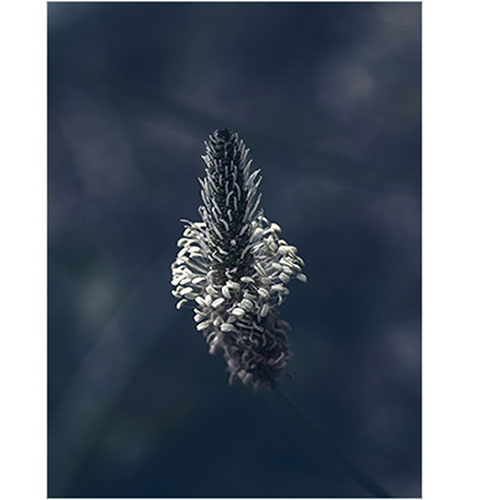
I photograph on the wild meadows of Warsaw. The plants growing there are walked past without a second look and called weeds — meaning plants that came up where nobody planned them. Up close, in good light, they turn out to be something else entirely.
Ribwort plantain — what does it look like?
You recognise it by the leaves: narrow, lance-shaped, gathered in a rosette at ground level, with distinct parallel veins running the length of the blade. From the rosette rises a leafless, ridged stem topped with a short, dense spike. The flower head is unremarkable until it releases its anthers — then a ring of white, trembling threads surrounds it, looking like a band of light when lit from the side.
It grows everywhere: lawns, verges, trodden paths. It tolerates compacted soil better than most plants, which is why you find it where nothing else will grow.
Greater celandine
This one is identified not by its leaf but by its sap. A broken stem releases a thick orange-yellow liquid that stains fingers at once — the surest identifying feature and a warning at the same time, because the sap is toxic and irritates skin. The flower itself is small, four-petalled and bright yellow; the leaves are soft, blue-green and scalloped at the edges.
It grows in shade, along walls, fences and rubble — it favours neglected places.
Wild cucumber
A climber that can smother a shrub or a fence in a few weeks. Its fruit is the most distinctive part: egg-shaped, covered in soft spines, hanging among a tangle of thin tendrils. Once dried, the tendrils remain and form a pattern like an ink drawing.
It is a non-native species, introduced as an ornamental and spreading without anyone's help — in practice it is now part of the landscape of Warsaw's wastelands.
Why these plants?
Because they go unnoticed, and because they have forms I would not invent in the studio: the geometry of a spike, the tangle of tendrils, the symmetry of a rosette. I photograph them with a narrow beam of light against a dark background, to separate the shape from the clutter of the meadow. It is the same subject that returns in my botanical painting — only without the brush in between.
Prints are made on archival papers in limited editions. All the photographs are in the photography gallery.
Cookies
We use cookies to personalise content and ads, to provide social media features and to analyse our traffic.
We share information about how you use our site with our social media, advertising and analytics partners. They may combine it with other information you have given them or that they have collected from your use of their services.
- The site does not work without them. Always on.
- Remembering your choices, such as language.
- Anonymous visit counts, so we know what is being viewed.
- Tailoring ads outside this site.